Rating: 2 out of 5 avenging cockroaches.
Buy Creepshow from Amazon here.
(Creepshow isn’t currently available on Bookshop.org)
Preview (i.e. no spoilers):
EC Comics (the ‘Comics’ of which is fully redundant, since EC stands for ‘Entertaining Comics’. No wonder they went on to pollute the minds of so many children) was a publisher that hit its prime during the 1950s, selling horror, sci-fi and other genre comics to young (mostly male) readers. Creepshow is, in the main, an homage to EC’s output, with particular reference to Tales From The Crypt.
As such, it’s basically just a bit of fun, but the tone does feel a little all over the place, as though they weren’t sure of their target audience’s age. The requisite Spooky Rotting Skeleton Narrator (called The Creep, natch) speaks to his audience as though they were, I would say, roughly 11, and litters his text with worse puns than are seen even on the fine webpages upon which you now sit, good reader. I actually skipped a lot of his dialogue because I just found it a ham too far, like an astronaut pig. But then the tone of the stories themselves feels older, with occasional swearing, references to sex and obviously lovely, lovely gore.
I thought it was quite a fun read, and hark back to Ye Olden 1950s stories-with-a-twist, but I wouldn’t describe this as essential Stephen King reading.
Review (i.e. spoilers from beyond the graaaaave)
Creepshow is a funny one, because the book is a comic that tied-in to the release of a film whose screenplay was penned by King. It’s not clear whether he directly adapted the screenplay for the comic, or if somebody did it for him. So I need to really reference both the film and this comic to do a proper review. And Lord knows, I want to do a proper review, and one day hope I will.
Luckily, the film and the comic are very close in structure and dialogue – although the film is superior in pretty much every way, I think. It knows it’s a more adult outing, with Romero’s trademark gross-out effects and the flexibility to drop F-bombs hither and thither. The pacing is better managed, and the dialogue more believable. Finally, thank God, The Creep is nowhere to be seen, and thus he can’t bore us with tedious jokes as I do you.
Of the five segments, I think the best is Something To Tide You Over, featuring as its main cast Leslie Nielson and Ted Danson. While the whole film has great actors (with the possible exception of Stephen King himself, huck-hucking it up as a hick who trifles with the wrong space-rock), these two really seem to get the feel for the dialogue and take it from mere words into full characters. The segment itself is reminiscent of The Ledge, a short story that appears in Night Shift, but as this is Creepshow, it takes more of a grim, supernatural turn.
The stories here, as presented, aren’t King’s best. They lack depth – which is right for the format (in Danse Macabre he reviews Tales From The Crypt as essentially morality plays, where bad deeds are punished and although the goodies rarely prosper, they get some form of ironic moral victory). But even if it does fit the medium, like candyfloss at a fair, it doesn’t satisfy your hunger like King’s stories do at their best. You won’t be left thinking about these stories weeks (or even days) afterwards – you watch them and then immediately move on. There’s no foul in that – nothing wrong with enjoying a plot for the time it’s on – but given that I’m comparing this work to the rest of his oeuouevre (enough vowels in there and it’s right eventually), I can’t really ignore its transience.
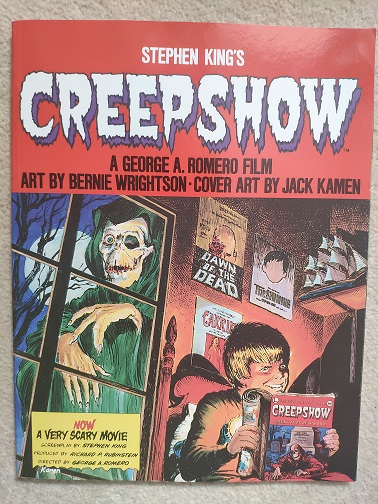
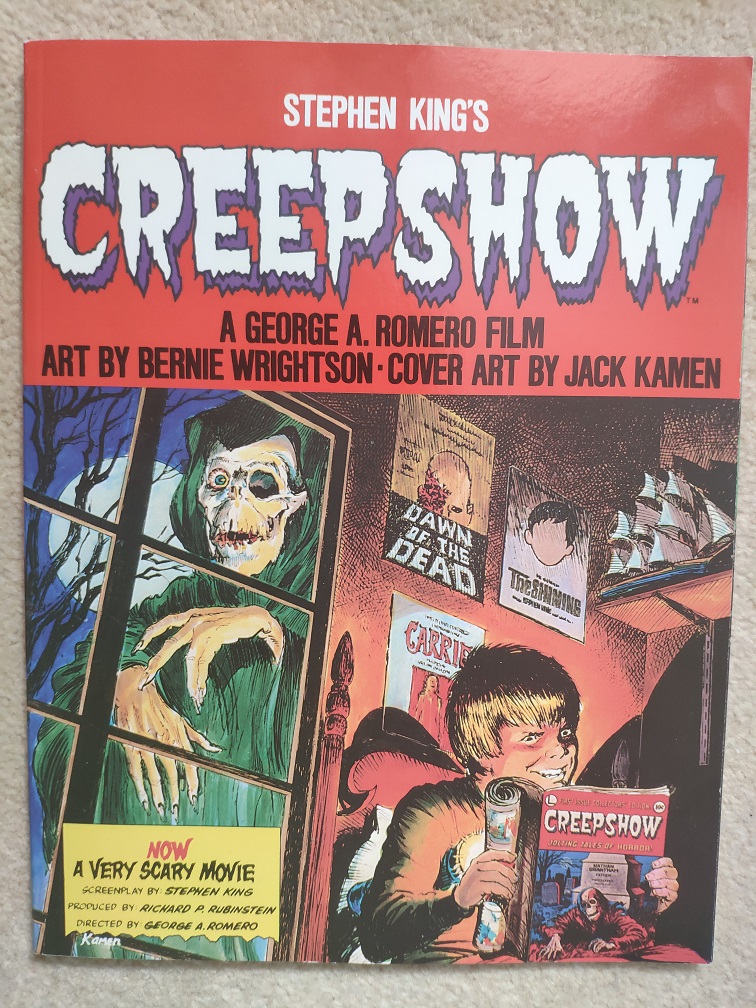
The artwork of the book is fun like the opposite of a Fun Run. I wasn’t even alive in the 1950s but somehow it transports me back to those days of pulpy comics read under the bedcovers and probably malted shakes and so on. It’s gory and grotesque enough to capture the horror of the stories, and the frame structure lends itself to the speedy reading that a thriller like this should demand.
Overall, it’s not going to compete with his other work, or even other comics works at their bests, but it is probably one of King’s better examples of screenwriting.
 Read Everything By