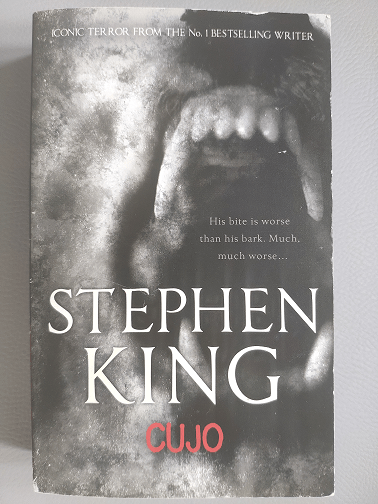
Rating: 4.5 out of 5 misjudged cereal ideas
Buy Cujo from Bookshop.org here.
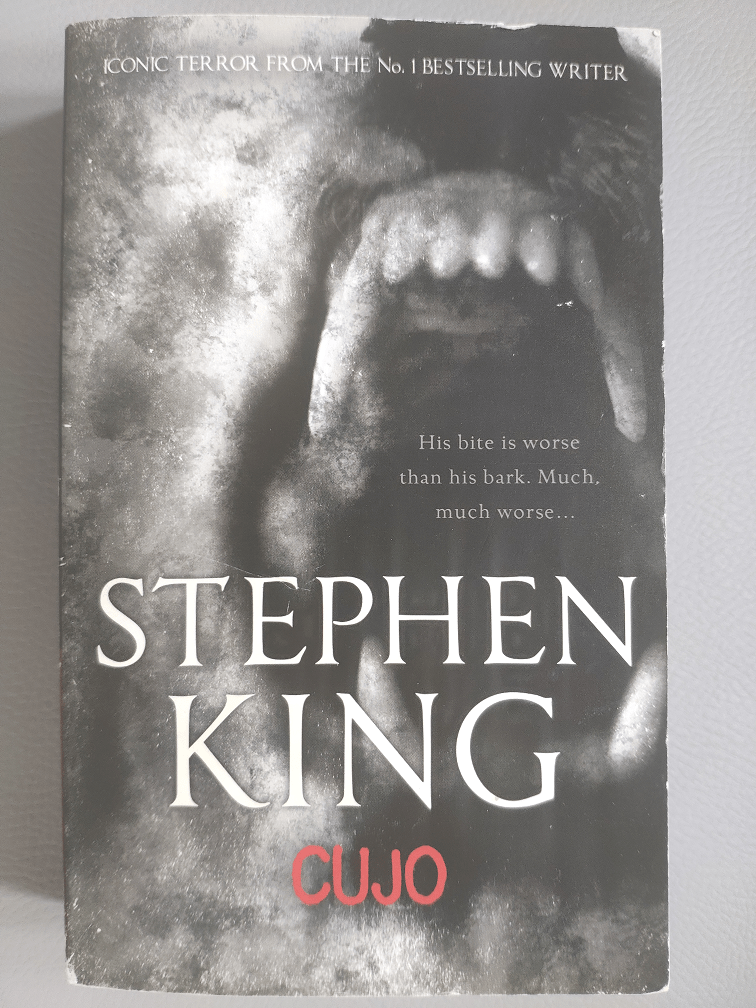
Preview (i.e. no spoilers)
Cujo is one of The Big Kings, along with the likes of The Shining, IT and The Tommyknockers (if you’re not familiar with this last, please be aware that this was a very, very funny joke, well done me). And it’s earned its place on that podium; an athlete of hard work rather than performance-enhancing drugs, which is ironic given how immensely off his face King apparently was while writing it. He’s said in interviews that he barely even remembers authoring Cujo thanks to megadoses of cocaine and alcohol, which is a bit of a slap in the face to people who spend sober years carving the words out of their heads to write a book. But this is Read Everything By, not Judge Judge and the Judgement Hour, so let’s stick to the book.
If it had been written by anybody else, Cujo would rightly be shelved under tragedy rather than horror. Yes, it’s tense as a well-erected guy rope (not intended as a euphemism), and yes, there’s blood aplenty. But the overwhelming feeling you leave with is sadness. Like a sheep in a massive bitey dog’s clothing, this is a tragedy dressed up in the gripping pace of a thriller.
King’s books occasionally suffer from ‘too many characters with full backstories’ syndrome, and there’s an element of that here. But in the main, it’s a swift and emotional read, and well worth your eyetime.
Review (i.e. spoilers by the ruddy sackful)
You’ve been warned above that this contains spoilers, but I’m going to start with an absolutely massive one – so very seriously, don’t read on if you don’t want the entire book to be ruined for you like a sinful world under the stern eyes of a flood-happy god.
Okay?
Okay. Holy shit, Tad’s death is heartbreaking. I said in my previous review of The Shining that a chunk of the book’s emotional resonance comes from wanting to protect Danny Torrance, an innocent adrift in a sea of adult devastation. While I found I identified with Tad less, because so little of the book was written from his actual viewpoint, the fact that he dies at the end, after so many potential opportunities for him to be saved, is brutal, devastating, and elevates this novel into brilliance. It takes real guts to end this sort of story on a downer ending like that, but it makes it all the more poignant.
There are some threads that add to the atmosphere of the novel but don’t quite lead anywhere, like a breadcrumb trail eaten up halfway by peckish birds. I think King plays with the idea of the Boogeyman much more successfully here than in his initial forays in The Boogeyman, in the Night Shift collection of short stories. It injects a note of fear, and the throwbacks to Frank Dodd from The Dead Zone are quite satisfying, taking him from being a lone psychopath to representing the hidden, deepest fears that lurk in us all, and can embody fear in the consciousness of small towns. But ultimately it’s an odd and functionally unnecessary paranormal twist in a story that’s otherwise grounded in the real; a Jaffa cake in a fruit salad.
One thing that’s nice to see King return to is some well-crafted female characters. Almost all his novels and stories since Carrie have been focused on male character-sets, with a few secondary inclusions like Sarah in The Dead Zone. Here, both Donna and Charity are complex, interesting and realistic people. Charity in particular feels brilliantly drawn – her tense balancing act of a marriage is dealt with cleverly and upsettingly. King does create great female characters (presumably bouncing them off his wife Tabitha, as he did with Carrie) when he’s of a mind to. Hopefully this will continue in the books he wrote after he ditched the cocaine, because his books are better for it.
At its heart, this isn’t purely about a rabid dog cornering some humans. As with all King’s best books, it plays on much deeper concerns, as though our secret fears were nothing but a game of Hungry, Hungry Hippos. The real core of the book is – bad things happen to good people. You don’t need to be a bad person for everything to conspire to go wrong for you. The fact that Vic’s ad agency might lose their lifeline account is nothing to do with anything he did or could predict, nor that his wife cheated on him. Donna could not have slept with Steve Kemp, but the reasons behind it – the terror of age and gradual narrowing of her life – were out of her hands, and the destruction of her home was disproportionate to her faults. Tad just wanted to play with his trucks and forget about the monsters in his closet. Cujo just wanted to be a good dog, and couldn’t have known he’d encounter a rabid bat – and the violence he wrought afterwards was the fault of a pernicious infection, not his moral core.
The book itself concludes “(f)ree will was not a factor”, and this secret universal fear, that we can’t control or stop all the bad things that might happen to us, is what has the real teeth in this book. That and the enormous rabid dog, obviously.
 Read Everything By
One thought on “Cujo (1981)”