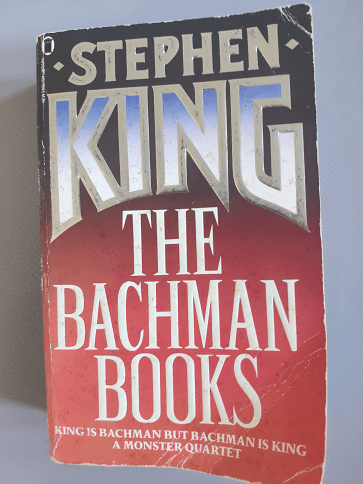
Rating: 2-out-of-5 misanthropic teenagers
[No purchase links – King deliberated removed it from publication, so I’ll respect that. But it’s not hard to find a PDF online, if you’re desperate. Also here’s a bonus link to King’s essay Guns, which elaborates further on that decision.]
Preview (i.e. no spoilers)
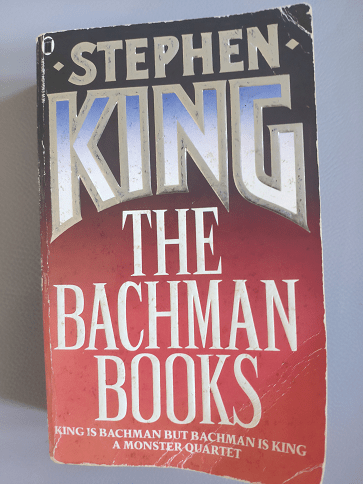
This is one of the books that King wrote in university, before Carrie was even a twinkle in his evil literary eye – but published much after, in 1977, under the pseudonym Richard Bachman. You can feel his youth in it. The first half particularly feels like Confessions Of A Teenage Edgelord, like Holden Caulfield trying to write Kurt Vonnegut.
That said, it does get much more interesting in the second half, when it starts channeling Lord of the Flies a little more. It gets gripping, and you feel more of that patented can’t-put-it-down King feeling.
It’s definitely worth picking up (if you can – he discontinued its publication after it seemingly had some level of influence on a few school shooters) but don’t expect the high-falutin excellence of The Shining here.
Review (i.e. fresh spoilers! GETchor fresh spoilers here!)
King has often said that he generally sits down to write a story with nothing but the vaguest idea of how it’ll pan out. When you know that, you can see it in play. It’s not a bad thing at all – I think it gives King’s books a true sense of danger; you know that anything could happen to any of the characters, because they’re not destined for anything specific. The protagonist really could get chopped in two halfway through the book, and there might not be a happy ending. It keeps you on your brain-toes.
Rage exemplifies this approach. The main character has no idea of what he’s going to do – he just picks up a gun, walks into a classroom and lets things unfold as they will. When you realise that, the book becomes much more satisfying. Up until then, it feels like Decker has it all planned out with a sociopath’s eye for detail. Which is fine, but doesn’t really give you much to work with – it’s just a story unfolding, A to B to grimly inevitable C. But when it becomes clear that he’s just setting up the situation and then letting the chips fall where they may, suddenly the book has a lot more to say about society. I.e. We’re all fucked and you’re first.
Like a fury-aqueduct, it feels like King is channeling a lot of his own frustrations into this. The sense of powerlessness that our society foists onto kids, and then the way those kids react to create their own power hierarchies and inner/outer behaviours, lie at the root of this novella. This is about what happens when you push people too far, when your power systems crush them just a bit too much. Getting it on, Decker’s favourite phrase, might as well be getting it out – getting the rage out of your system, and letting your secret self hang out for all to see. Being driven by instinct rather than social norms.
It’s not totally clear whether there’s an intended take-away message from this whole thing – King’s a bit overfond of Freud, but I don’t think he’s suggesting we all lynch our superegos and let our ids run riot. But you do come away with the sense that he’s railing against hypocrisy, imbalanced power structures and bullies.
There’s always something quite satisfying about someone stickin’ it to the man like an advert for masculine glue, and that does ring through this book in bounds. But it also does it from the perspective of that perennial moaner, the disaffected yoof, and the immaturity of that internal logic, while accurate to the character, can be a bit tiresome.
 Read Everything By